

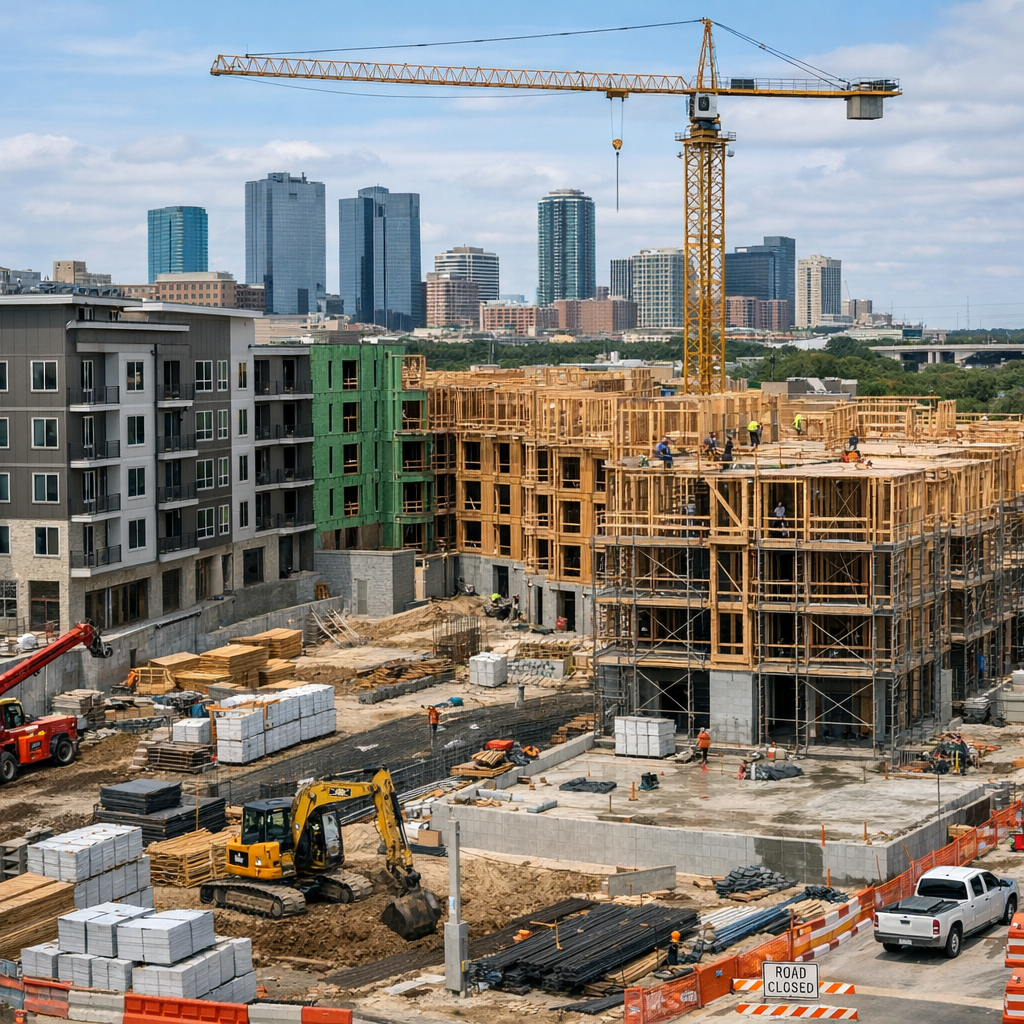
Fort Worth’s housing market is shifting—and while change has crept in quietly, there are signs worth watching if you’re renting, buying, or following local development.
Home Prices & Market Conditions
The median home price in Fort Worth recently hit around $340,000 but shows little change year-over-year—down roughly 0.05% compared to last year. Homes now sit on the market for just under 50 days on average, indicating neither a rush nor a full standstill. These are hallmarks of a market that’s cooling after rapid growth.
Meanwhile the Fort Worth-Arlington-Grapevine metro area continues to face affordability challenges. Though average home prices are hovering in the low-$400,000s, the supply of homes for sale is on the rise, and vacancy rates remain much tighter than in many other areas, but have eased slightly from earlier years.
Rental Trends: A Slight Climb & Long-Term Pressures
Average rents in Fort Worth are near $2,100 for all bedrooms and unit types—a subtle increase month-over-month, while year-over-year rent growth has stalled. It signals a stabilizing environment after sharp jumps during the housing shortages earlier in the decade.
For many renters, the challenge remains cost burden—spending more than 30% of income on housing. As rents hold steady, incomes and financial stability play an outsized role in deciding whether renting or purchasing is viable.
Promises & Pitfalls: New Developments and Affordable Housing Efforts
Mixed-income and affordable housing projects are increasingly part of Fort Worth’s growth story. The Stop Six Choice Neighborhood Initiative is replacing older public housing with nearly 1,000 mixed-income units and bringing along commercial spaces, parks, and amenities.
The Fort Worth Community Land Trust is working to provide ownership opportunities starting around $135,000 in neighborhoods like Morningside, Hillside, and Stop Six, using models where homeowners own homes but the land remains under trust ownership to keep costs down.
The City’s Housing Finance Corporation also continues to deploy funds toward developments serving households earning at or below 80% of the area median income, bringing forward both new apartments and homes with a range of amenities.
What This Means If You’re Buying or Renting
- If you’re a buyer, this may be a moment to negotiate. Listings are staying longer than in the height of price surges, giving more room for buyers to evaluate without chasing dramatic bidding wars.
- Renters may have some breathing space. With rent increases flattening, finding something well-priced may require flexibility on size, location, or amenities.
- For anyone interested in affordable or mixed-income housing, tracks like Stop Six and the Community Land Trust offer real opportunity—but demand is likely higher than supply. Keep tabs on waitlists and eligibility criteria.
- Location still matters more than ever. New development is pushing north and northeast, with areas such as Bonds Ranch, Eagle Mountain, and North City seeing new multifamily and mixed-use projects.
Looking Ahead
The Fort Worth market is in a steadier place now. Prices are no longer exploding, but neither are they dropping sharply. Rentals are holding steady, and new development—especially in affordable and mixed-income segments—is trying to catch up with population growth.
In short: it’s a moment that rewards careful planning. Whether you’re setting out to buy, rent, or invest, understanding both the steady undercurrent of growth and the rising affordable housing efforts will give you a clearer view of where opportunities lie.