

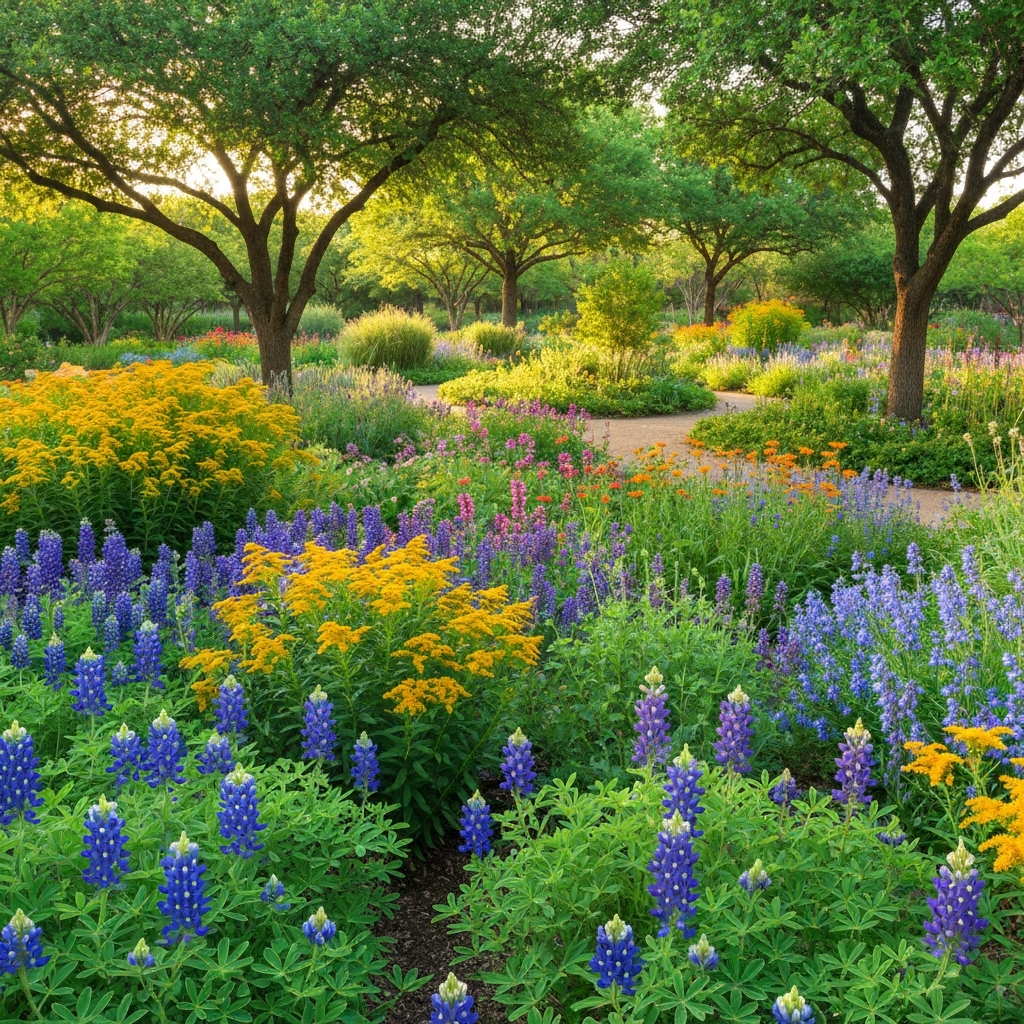
Fort Worth’s unique position at the crossroads of the Cross Timbers and Blackland Prairie ecoregions offers gardeners a rich palette of native plants that thrive in our local climate and soil conditions. Embracing these indigenous species not only enhances the beauty of our landscapes but also promotes environmental sustainability.
Why Choose Native Plants?
Native plants have evolved over thousands of years to adapt to the specific conditions of North Texas. This adaptation provides several advantages:
- Water Efficiency: Once established, native plants require significantly less water than non-native species, making them ideal for Fort Worth’s variable rainfall patterns. Their deep root systems allow them to access moisture from deeper soil layers, reducing the need for supplemental irrigation. [Source]
- Low Maintenance: These plants are naturally resistant to local pests and diseases, minimizing the need for chemical fertilizers and pesticides. Their adaptation to local soils means they thrive without extensive soil amendments. [Source]
- Support for Local Wildlife: Native plants provide essential food and habitat for local pollinators, birds, and other wildlife, fostering biodiversity in urban and suburban areas. [Source]
Top Native Plants for Fort Worth Gardens
Incorporating native plants into your garden can be both aesthetically pleasing and environmentally beneficial. Here are some top choices for Fort Worth landscapes:
Pecan Tree (Carya illinoinensis)
As the state tree of Texas, the pecan tree is a majestic addition to any landscape. It offers ample shade and produces delicious nuts. Ensure you have sufficient space, as mature trees can reach up to 100 feet in height. [Source]
Hummingbird Bush (Hamelia patens)
Also known as the Mexican flame, this shrub features vibrant red blooms that attract hummingbirds and butterflies. It’s drought-tolerant and thrives in both sun and partial shade. [Source]
Gregg’s Mistflower (Conoclinium greggii)
This perennial produces clusters of light blue flowers that are a magnet for butterflies, especially the queen butterfly. It prefers full sun and well-drained soils. [Source]
Mealy Blue Sage (Salvia farinacea)
Known for its spikes of blue to violet flowers, this hardy perennial thrives in full sun and is drought-tolerant once established. It’s a favorite among bees and hummingbirds. [Source]
Turk’s Cap (Malvaviscus arboreus)
Ideal for shady areas, Turk’s Cap produces unique, red, turban-shaped flowers that bloom from summer to fall. It’s a hardy plant that attracts hummingbirds and butterflies. [Source]
Getting Started with Native Plants
Transitioning to a native plant garden can be a rewarding endeavor. Here are some steps to help you get started:
- Assess Your Site: Understand the specific conditions of your garden, including soil type, sunlight exposure, and drainage. This will help you select plants that are best suited to your space.
- Start Small: Begin by incorporating a few native plants into your existing landscape. This allows you to observe how they perform and gradually expand your native plantings.
- Seek Local Expertise: Visit local nurseries that specialize in native plants, such as Eco Blossom Nursery, to find species that are well-suited to the Fort Worth area. [Source]
- Plan for Diversity: Aim for a mix of trees, shrubs, perennials, and grasses to create a dynamic and resilient landscape that provides year-round interest and supports a variety of wildlife.
By embracing native plants, Fort Worth gardeners can create beautiful, low-maintenance landscapes that are in harmony with our local environment. Not only do these plants conserve water and reduce the need for chemicals, but they also play a crucial role in supporting the health of our local ecosystems.